
Search engine optimisation
Why choose our SEO strategies?
SEO Specialist for Successful Search Engine Optimisation
✓ 10+ years of experience
✓ Data-driven approach
✓ Transparent reporting







SEO, or search engine optimisation, is a strategy that ensures that your website is better found will be in search engines as Google. By using relevant keywords, optimising the speed of your site and offering valuable content, you increase the likelihood that up your website appears in the search results. This leads to more visibility, more visitors and ultimately greater success. SEO is therefore essential for businesses looking to grow online and reach their target audience effectively.
To start with, we look at your website. What improvements can still be made. Because that is the basis to build on. If the SEO in the website is not right, the SEO pages will suffer.
Next, we will do a keyword research. Together with you, we will determine what we want to score on. Once the keywords have been chosen, the texts need to be created.
We optimise your website and strengthen your authority with strategic link building. This is how we build sustainable rankings for important search terms.
We continuously monitor rankings, traffic, leads and conversions. Based on data, we make adjustments to further improve results.
SEO is a crucial part of your online marketing strategy that can have a direct impact on the visibility and success of your website. Here are some of the key benefits of an effective SEO strategy:
Increased visibility and traffic
SEO helps your website rank higher in search engines, allowing more people to find your business. This increases the number of visitors, without you having to pay per click.
Long-term results
Unlike paid advertising, SEO offers long-term benefits. A well-optimised website continues to attract organic traffic over time, even without continuous investment.
Better user experience
SEO goes beyond keywords; it also improves the overall structure and loading speed of your website, leading to a better user experience and higher conversions.
Cost-effective
Although SEO requires an investment in time and resources, it is one of the most cost-effective marketing strategies in the long run because organic traffic does not involve direct advertising costs.
This is the result of an integrated approach over 12 months.
No isolated actions. But consistent growth.
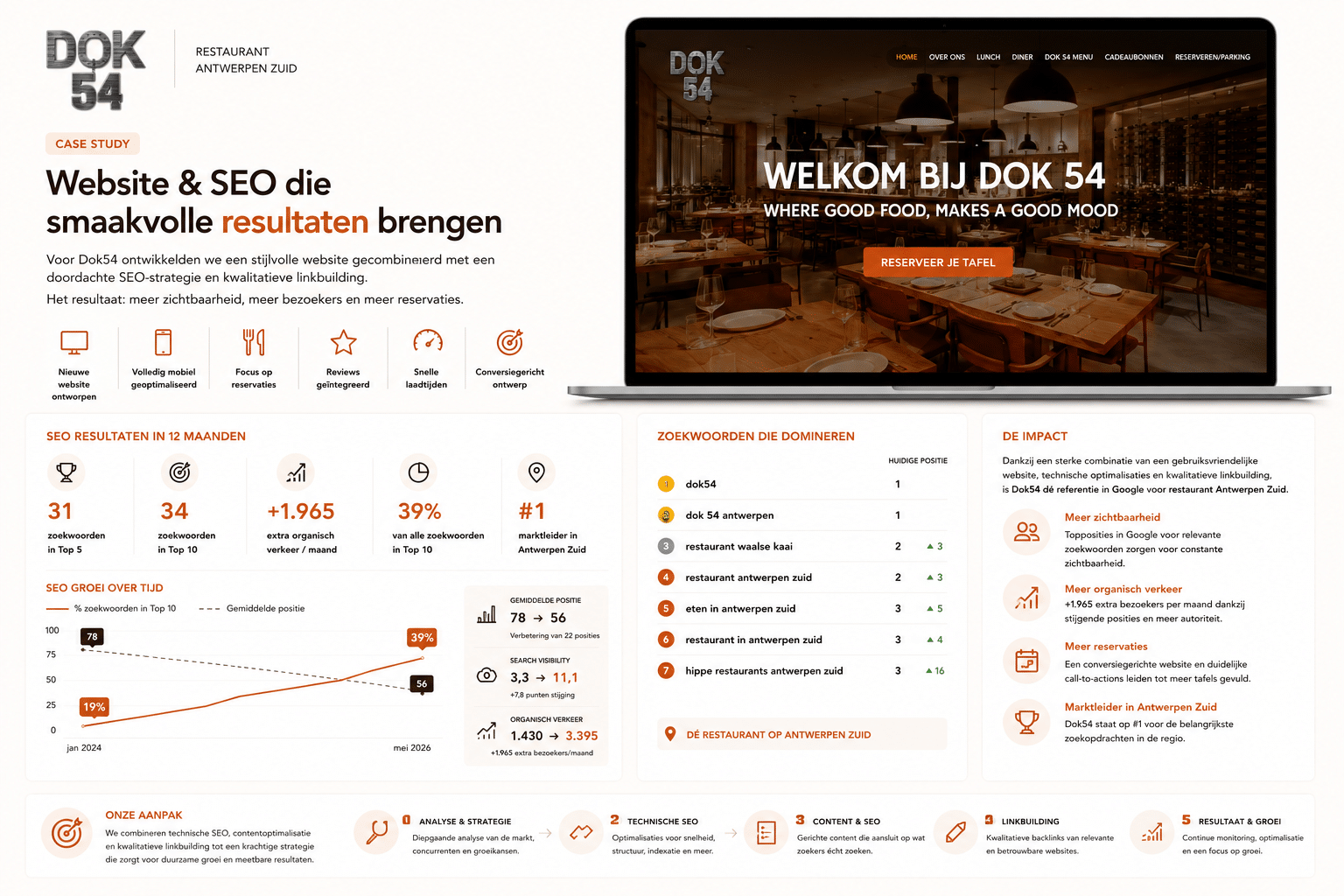
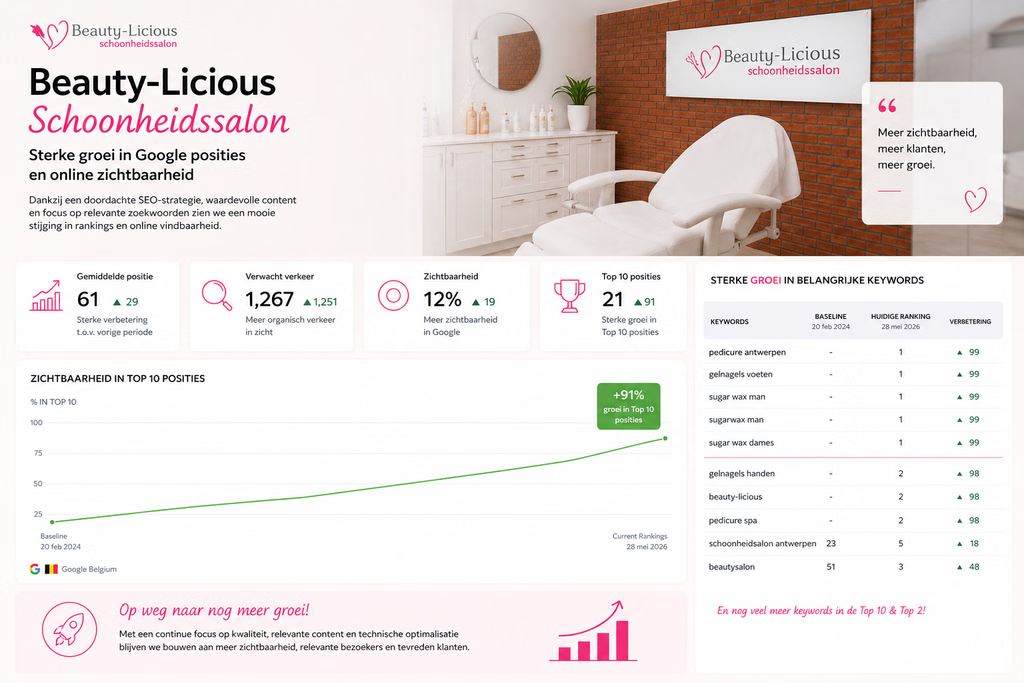
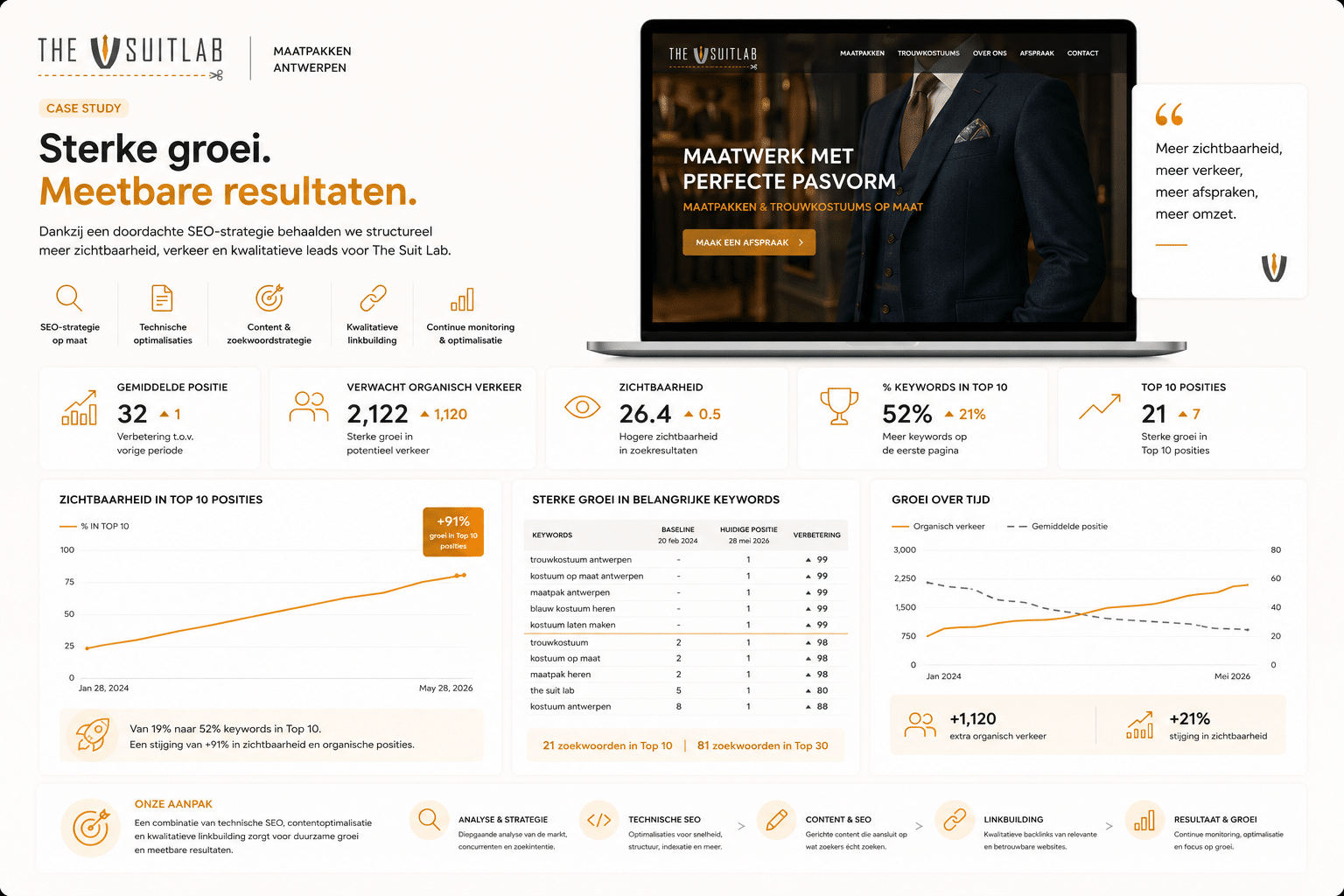
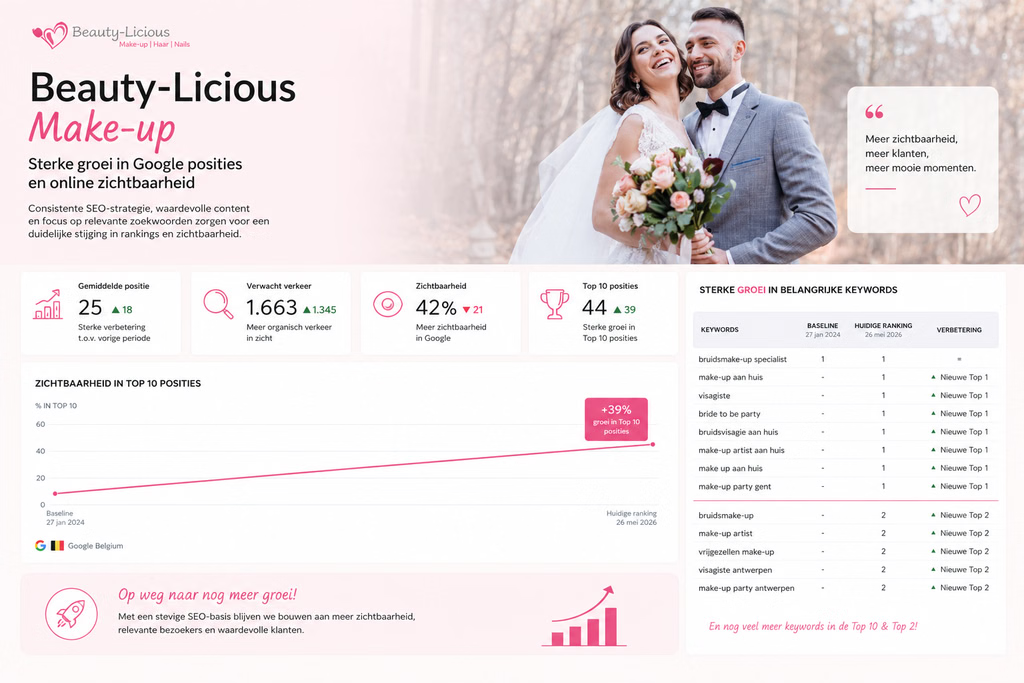
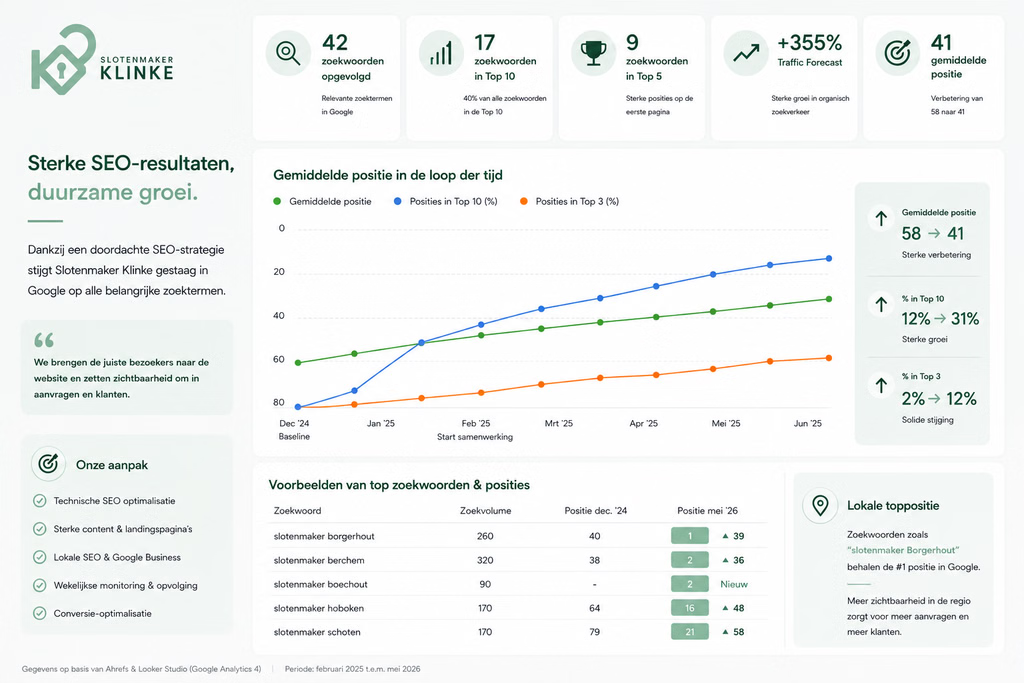
See what some of our clients say about their results thanks to our approach.
Find out where your growth system is leaking today
We analyse your current strategy and show exactly where structural growth is possible.
✓ No commitments
✓ Analysis tailored to your market
✓ Only for companies that want to grow

SEO, or search engine optimisation, is a set of techniques used to improve a website's visibility in search engines such as Google. The goal is to rank higher in search results for relevant keywords so that more people find your website. SEO is important because it attracts organic traffic to your website without having to pay for ads. Not only does this help you increase your reach, but it also builds trust with visitors because they find your website naturally.
SEO is a long-term strategy and the results vary depending on several factors, such as competition, the current state of your website and the chosen strategy. Generally, you can expect the first visible results within 6 to 9 months of implementing SEO techniques. However, this does not mean that you will already be on the first page of Google at that point; the process may take more time. Patience and consistency are important, as SEO efforts often become increasingly effective over time.
SEO (Search Engine Optimisation) focuses on optimising your website for organic search results, which means receiving traffic without paying for ads. SEA (Search Engine Advertising), like Google Ads, is search engine advertising where you pay for every click on your ad. SEO offers long-term benefits and does not require continuous payment, while SEA brings immediate traffic but incurs costs. The two can go well together: SEA delivers quick short-term results, while SEO helps build sustainable online visibility.
Choosing the right keywords starts with researching what your target audience is looking for. Tools such as Google Keyword Planner or SEMrush can help find popular keywords relevant to your industry. It is important to use a mix of short, general keywords and longer, more specific search terms (long-tail keywords). Focus not only on search volume, but also on search intent: what do users want to find? Try to choose keywords that match your target audience's questions or problems and make sure they are naturally incorporated into your content.
On-page SEO refers to all the optimisations you do within your own website to rank better in search engines. This includes optimising text, titles, meta-descriptions, images and the technical structure of the website. Off-page SEO, on the other hand, deals with external factors that affect your ranking, such as getting backlinks from other websites. Both forms of SEO are important for improving your online visibility: on-page optimisation makes search engines understand your website better, while off-page SEO gives your website more authority.
Backlinks are links from other websites that point to your website. They act as a kind of recommendation and help search engines determine how reliable and relevant your content is. The more quality backlinks you have from reliable websites, the better your chances of ranking higher in search results. Getting backlinks is an important part of off-page SEO. However, it is important to focus on quality rather than quantity; a single backlink from an authoritative website can be more valuable than dozens of links from unreliable sources.
It is certainly possible to do SEO yourself, especially if you are willing to invest time in learning the basics. There are many online resources and tools available that can help you get started. However, SEO is an ever-changing field that requires technical knowledge and experience to be truly successful. An SEO expert can help you develop an effective strategy, avoid mistakes and stay abreast of the latest trends. For complex projects, it is often wise to hire a professional.
The cost of SEO can vary greatly, depending on the scope of your project and the chosen strategy. If you do SEO yourself, costs can be limited to tools and time investments. If you hire an SEO agency or expert, prices can range from several hundred to thousands of euros per month, depending on experience and services. It is important to see SEO as a long-term investment. Inexpensive SEO packages are often ineffective, while a strategic approach will pay off much more in the long run.
There are many factors that affect your SEO ranking, but some of the most important are: the quality of your content, the use of relevant keywords, the speed of your website, its usability on mobile devices, the structure of your website and the number and quality of backlinks. Search engines also look at user experience, such as how long visitors stay on your website and how many pages they visit. By optimising these factors, you can increase your chances of appearing higher in search results.
You can measure the performance of your SEO with tools such as Google Analytics and Google Search Console. With these tools, you can see how much organic traffic you receive, which keywords you score on and how users behave on your website. We provide you with an overview of the keywords and their positions in Google. We will then report these to you each time from the 4th month onwards.